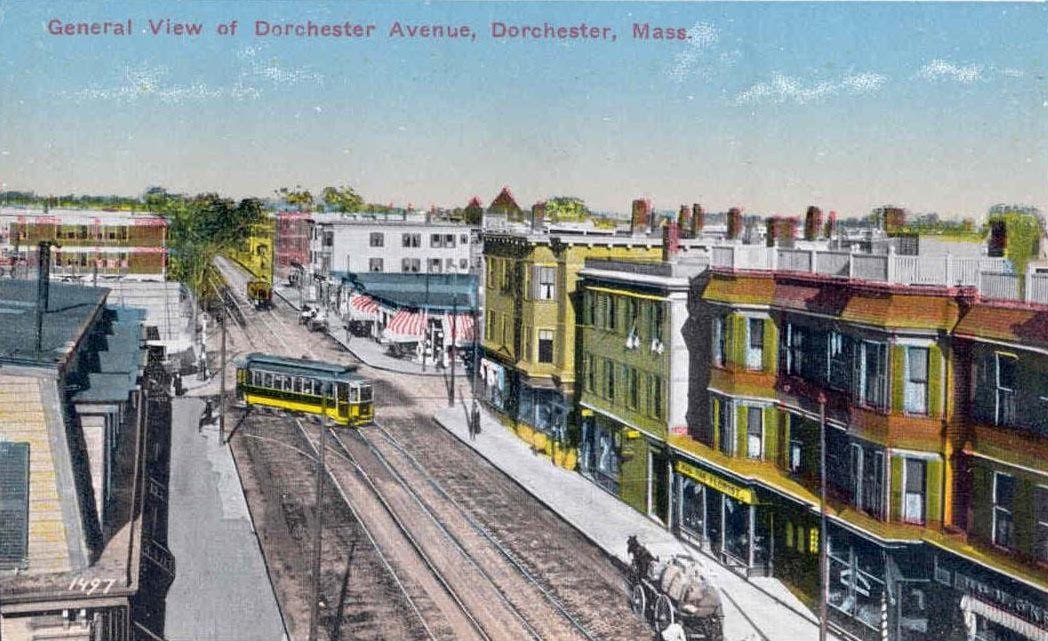
Boston, MA (2024)
Anti-Displacement Tools
The City of Boston’s anti-displacement strategy has a missing middle. While local government offers many policy documents and housing programs, Boston needs more empowering, hopeful communications that are accessible to laypeople.
After interviewing 20 stakeholders inside and outside of city government, I produced six prototypes that are being used to address the communications gap.
My work addressed three needs raised in user interviews:
A centralized resource guide to train new staff
Documents that offer action steps to anxious residents
Stories that put progress in hopeful and human terms
Here are the prototypes.
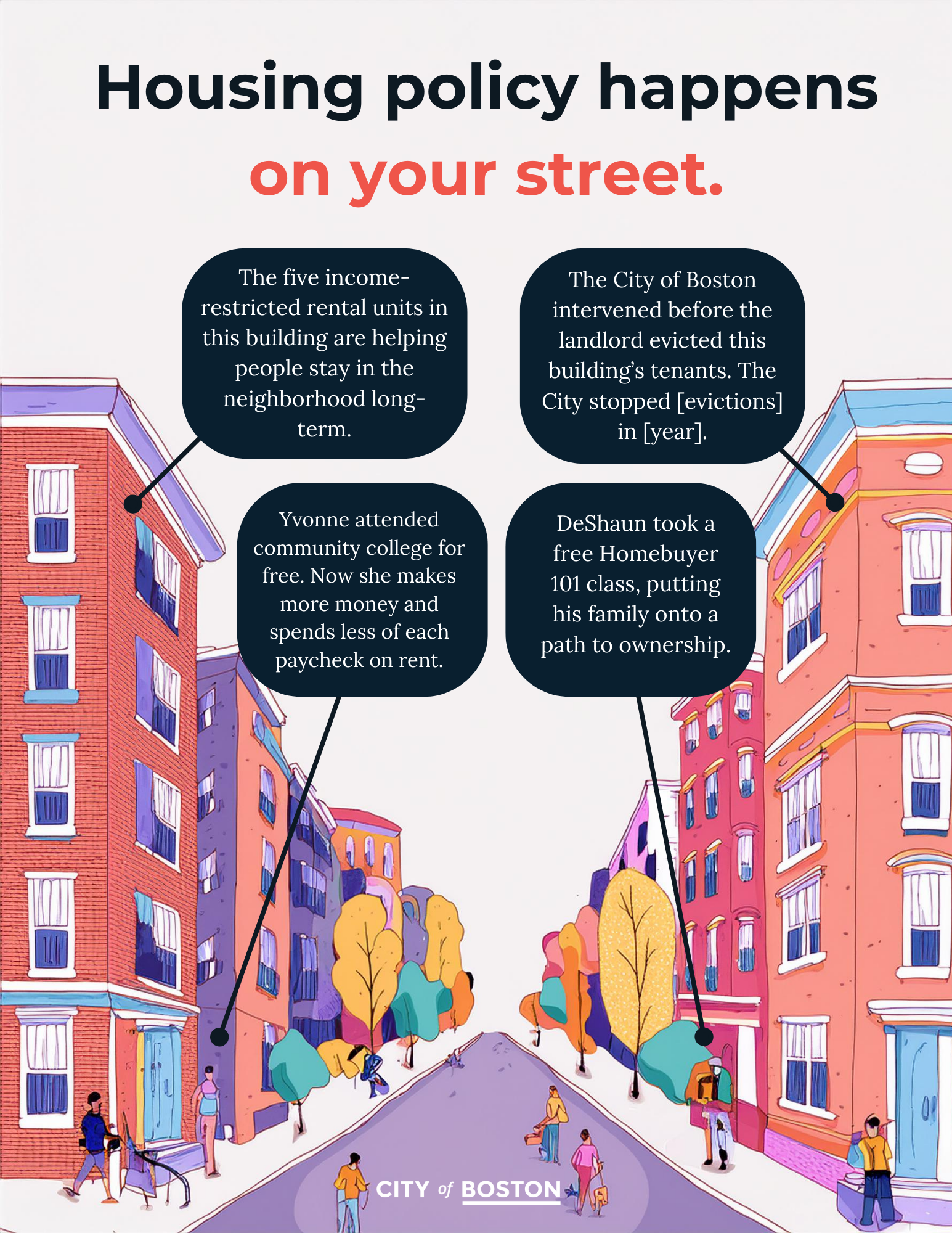


Prototype 1: Bus Stop Poster
To put housing policies needed to be put in human terms, I annotated a street of Boston triple-deckers with stories of the city’s progress in fighting displacement.
Interviews with housing advocates and non-profit staff confirmed that transit advertisements are a reliable way to reach residents.
Prototype 2: Resource Flow Chart
For new staff or people working outside the housing space, I created a flow chart that lands at a direct link to a resource within three questions.
Empathetic language helps government employees anchor conversations in care while providing concrete tools and advice.
Prototype 3: Mattapan 2023
Public-facing staff shared that residents cared deeply about the changes that were happening in their neighborhood.
This resource uses hyper-local data and resource QR codes to showcase what the City of Boston has done and will do to help people close to home.
Prototype 4: The Four P’s
Using an image of a house, this graphic showcases the City of Boston’s anti-displacement strategy in four easy-to-understand Ps.
The image can be put into flyers and community meeting slide decks to put policies and programs into simple, visual language.
Prototype 5: Instagram 2.0
As other city governments launch TikToks, social media that grabs attention and tells stories is vital, especially in reaching the young adult demographic impacted by displacement.
Making Boston Home is a proposed series of visual stories about Boston residents who were able to use renter stability and home ownership programs offered by the City of Boston.
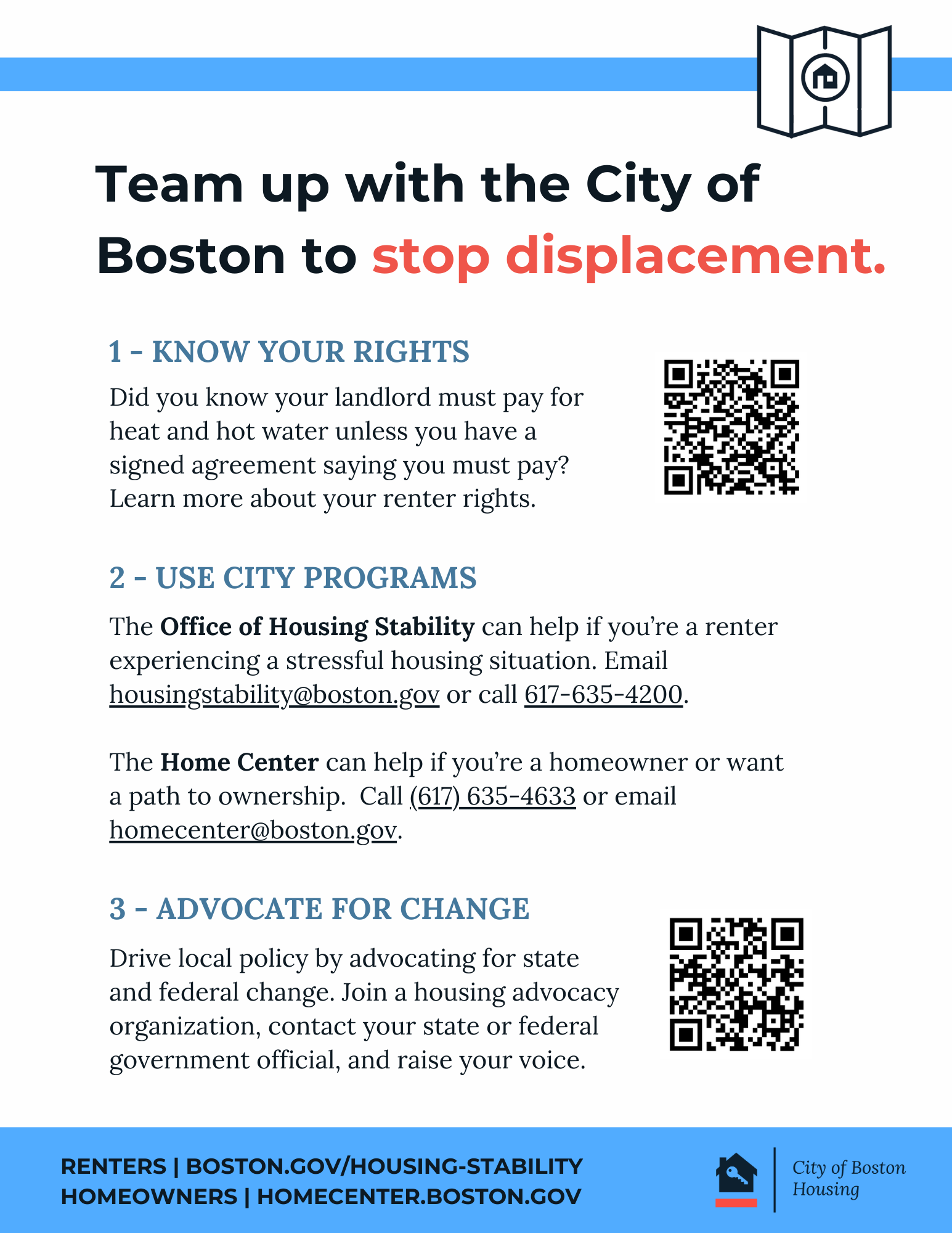
Prototype 6: Three Actions
This flyer offers three concrete actions residents can take to stop displacement.
Rather than putting the impetus on residents to solve housing instability, this resource illuminates an anti-displacement partnership that the City of Boston is playing a role in.